Monday, February 22, 2016

How're You, Really?


Three fundamentals attend us. The physical, the mental, the spiritual. Somewhere in the mix is the emotional. One feels sore, or adrift, or compacted. A blend of all? Conversely, one may feel fit, or alert, or alight. Physically, mentally, or spiritually, as the poet e.e.cummimgs would have it, "feeling is all." So it is that the question, "How are you?" is given in the moment, answered in the moment, or when shall one make the cut off? Over the last two weeks? Three months? Grief is given a span of mourning. Headaches are expected to last only for awhile. The flu takes one by surprise and can lay us up for several days. A car accident? A muscle pull? The break-up of teenagers, or of adults. The new dog. The new child. The new house. The excitement over the new.... Well, one gets the picture. So when the question arises, 'How are you?', it reaches one where one is at, right now.

In the old days (which most certainly was before electronic emails and texting, and when the phone call, especially long-distance, was a rare and privileged thing)... In the old days one wrote a letter and posted it, and waited and waited for the return. “How are you?” you'd ask. 'Well,' the answer would eventually come (at least almost a month later), 'well, we are doing fine. Only, I've got this headache, and when Barney said he'd put his foot down if I don't take an aspirin I told him to stop acting like a flamingo!' … So you'd write back: “Ha! Is your headache gone now?”

Yes, Barney's blarney was a long time ago. So too the results of the operation, or the job lay-off, or even the new bike that little Tike was so excited about. So, just how much should one reveal? Especially to persons not 'in the inner circle', persons who cannot relate, or persons not familiar with the passage of one’s life in general. What does one say? What does one want from relating to the other? Sympathy? Pity? An ongoing drain on their care? Does it really signify that I shall have dental surgery (oh my!) next Monday? Now I shall have to explain how extensive, the reasons why, and the wherefore and what for and... Ugh. I'm fine. I'm fine thanks. I'm fine.

Really fine (or bad) moments are best understood alone. One cannot possibly always have a cheering squad; an egging-on cadre of friends; a 'you can do it!' section of onlookers who give you the encouragement and persuasion that helps, yes, but really truly is not always there. It is in the dark small hours of persistent pain when no one else knows about it that one is most taxed. Of what use is chronic pain to anyone else then? No one gets to ‘feel good’ for their own feelings of sympathy. Or it is when the relatively few steps from the car to pick up milk in the grocery store, desperately hoping that nobody will bump into you, or waylay you, or expect you to stand (unsupported) in a queue while waiting to pay, that others do not appear understanding of the very tenuous thread of persistence that you're clutching to. They appear to do these things normally, casually, as though being free from a wheelchair is as life is meant to be. Pain that is not seen is entirely overlooked. Inner pain. Is that why we really wear black while we are in mourning, that others might give us respect for our heart-sore, be altogether more cautious and courteous and considerate? People treat those with canes and crutches and walkers differently. Doors are opened for them. Is that why we (generally) readily speak of our 'hundred aches and pains that the flesh is heir to'? We get more noticed? Yet the real step by step accretions of inner reserve and physical endurance, akin to one’s training for a marathon, are for the long distance runner, alone. One’s best pace is realized when one is, indeed, all alone.


All around us are people perpetually in and out of pain and disasters and misfortunes. All around us are people who have more, appear more happy, more confident, more engaged. It is the comparisons by which we most determine our degrees of discomfort. (When I was a little boy, as I recall, it took me several times to realize others do not feel as I feel, when I felt it. And as I grew up, I came to see that almost everything has a beginning, middle, and end. This too shall pass.) So then, you ask as I continue my own journey along the length of life's physical fire-walk, how am I doing? Well, I'm fine. I'm fine. Really, truly, thanks. I'm fine. Accreting. You? 


Friday, February 19, 2016

Fond Farewell, Friend?


Friends hug. Things come together. Or they fall apart. We write one another. Or we don't. And the months intervene to become years. There grows a disconnect. Especially if there is little sense of a real kismet. 'Kismet', it's a quality difficult to define, ineffable in its vicissitudes, perplexing in its perspicacity, and confounding in its coincidental(s). Ducks of a feather? Holland’s Theory? The subtleties of nature so deeply atavistic that we, like foreign tribesmen suspicious of our differences, our otherness, however subtle, are not prepared to breach the walls of personhood and simply flow with the other? Why do we not tick-tack? Too many others in our lives? Too many people we know, must share news with, must ask about (let alone answer questions)? It appears when we do meet again we tend to bring a whole package of judgments, and we cannot but help ourselves. Where is this person 'at,' now? Still, we can hug our friends. (Even though we are not really truly friends at all; just people who know each other.)

Acquaintances of course usually arise out of being around someone in the field. ("I worked with him for 20 years and didn't know he played the piano," one might overhear). We are like that. We like people, even love them, but know little about them. Some we even know 'socially'. Some we've spent time with, shared dinners with, yet still there remains an essential disconnect. The details of the other's life do not register. We do not recall their birthdays. We do not regularly sympathize with their aches and pains and heartaches and accomplishments and newborn. We do not know the daily dictum of their lives. Friendship is there, yes, but...

Facebook is the favoured connector. Many a relationship is started (and forgotten) thanks to it. Thanks to it, I've personally picked up with some old friends and acquaintances from decades past. And at the same time, I've been able to see the posts of people I once knew. 'Creeping', my students call it. "I creeped you," they'd say, (as if reading something that another had posted as public in the first place is the wrong thing to do). Yet the comments and pictures of my old students growing older by the months and years are indeed interesting. Still, there is no contact between us. I have no need to tell them about me. They do not inquire. Nor do I reach out to ask them how they're doing; I can read it on Facebook.

Thing is, there's a concentric circle around oneself rather like that of a dartboard, with oneself as the bulls eye, yet better thought of in terms of being at the same time a holon, like being at the centre of a tennis ball. The outer limits are where we meet the people we hardly ever get to know; the waitress who serves us; the usher who shows us our seats; the store clerk or the ticket taker. The next layer is those we keep on recognizing, whose names we may even get to know, but who also don't quite know us, or we them. The local storekeeper. The local bank clerk. The doorman. Our fellow office workers. Then comes the layer where we are yet more intimate with people. And so on. The degrees to which we allow someone 'in' is the issue. And sometimes, like magic, someone just 'gets' us, and we they, and instantly we know we will always be friends. Always.

As the decades pass we find ourselves getting smaller and smaller with the persons we allow inside. It takes too much energy to blabber on about oneself. (And it takes too much energy to attend to the blabbering of yet another.) We just accept, love, care, and share with the other in a natural flow of accord. Kismet. Or we lose the threads, bit by bit, and that which was a connector at one time no longer serves. A pity, but there you have it. The relationship fizzles, and dies.

Some friends hug. Other merely shake hands. But in the end, feeling is all.


So… How are you, friend?


Monday, February 15, 2016

Love Lessons (the day after Valentine)


Everything relates to the self. Everything. We can only love because of the self. We can only feel, touch, sense, taste, imagine, and be, because of the self. Loving itself begins with ‘I’. It is a verb. It is action. And however subliminal the feeling, however clandestine, however secret, however differentiated, love arises from within the ‘me’. After all, I am loving. Everything relates to me.

 “I love you,” is a powerful pronouncement; and it is as casual as the language we use to say, “I love the view. I love it, that thing, that whatchamacallit, I LOVE it! I love to travel. Thanks for the gift; I love it.”

After all, everything relates to the self.

And the self relates to others. Thing is, the Self tends to see itself more easily in conjunctions, in juxtapositions, in comparisons, in contrapuntal tensions, and in direct opposites rather more readily than in accord and ‘love’. I am me. You are you.

And the difference is...

So we turn the pages of our lives in a series of competitions and comparisons that tend to devalue (or overvalue) that which was for what is Now. And love is tainted or apportioned or pretentious as we struggle to give it relevance within the immediacy of ‘me’. Even a tune to which one cannot relate will disaffect us. So too will words. Big words. Wrong words. So too will another’s physicality. So too will our needs and preferences and moods and intentions and actions create a series of circumstances by which we gauge the quality of our ‘love’.

Everything relates to me!

Everything.

Some persons list and enumerate their achievements. Some have pins all over a map to show others where they’ve been. Some have very many stamps in passports. Some have a closet-full of memory shelves (even though kept private for the privilege of the self.) 

At issue is how much ‘love’ of all one has done, one does, all one is yet to do, sets one free.


After all, isn’t that is what love really is, twixt you and me; a lesson in letting go while still loving you, endlessly.


Thursday, January 21, 2016

Verbosity as a Verb


Single-mindedness is a necessary exercise. How else to “go straight to the store and back, you hear?” It is the ticking off of a list of things to do, the accuracy of accounting and accountability, and of our crucial implementation of protocols and standards and expectations that achieves the correct and precise and needed results. (As a child I always wondered why, whenever we sang the song, “London Bridge is falling down, falling down (and again); we all fall down!” I wondered why the builder just didn’t ensure that it was built correctly!) Then too, one such as I very seldom bothers to ascertain all the facts, find out what the song is really about, check out the references, and make concrete objectivity out of situations. ‘One such as I’ am too right-brained, too intuitive, too abstract, too metaphorical, too distractible, and, well, too wordy.

The metaphorical mind is at once a caged bird. The acculturation of centuries incarcerates it, no matter the freedom its flights of fancy may take. At the same time, the now-a-days mind is advantaged by the very history that brings it to this time-period; all of philosophy and technology are married by the progress of humanity. Nature is affected, yes, but it essentially is on trajectories of its own evolution. It is we, mankind, who with intentions may make the shifts within the reaches of our own consciousness, however accidentally we may land. And yet, conscribed to being human, we cannot yet entirely free ourselves from the cages of society; become a member of any family, any group, any belief system, any town, any city, country, continent or even of our world, and there are evident expectations to follow. How else does one decipher the squiggly characters on this page? Life takes the learning of reading, ‘righting, and ‘rithmatic, right? Just how else is one expected to become (paradoxically) independent? Indeed, to each subgroup within the nests that we birds choose (or not) as we progress among the choices in our lives, there is evident expectation that one follows the rules. Indeed, the very cages within which we each exist are there to protect ourselves from others, as much as they from us. In-deed, it is for the sake of simplicity that our cultures keep it so.

“Just call a spade a spade,” my father often admonished me. He had a very distinct left brain. He was a most punctilious person. Every comma and dot and crossing of the T was precise. He preferred five or six word sentences. He liked simple sentences. “Keep them short. Say it in plain talk. What are you reading, Jane Austen?” Admittedly, our language has changed. (There was even a time when OMG was neither ubiquitous nor understood.) Admittedly, it is easier to be clear, easier to understand what another is getting at, easier to convey the list of groceries, easier to deliver the expectations, and easier to get what you want if you deliver or read or use precise language. (Yet still, one confesses, it takes quite a lot of knowledge to understand the modern lexicon. I for one often interchange LOL for Lots of Love, ha!)


Understanding one another is essential 'in our world'. Yet how are we to expand our knowledge and to stretch beyond our habitual expectations if we do not take on, find out, look up, and even use the new terms, the new ideas, and the new implications arising from ‘out there’? Poetry and analogy and imprecision and obfuscation and parables and stories and mythology and even our every-day lying all have their place in the evolution of our consciousness. Yet precision, so very vital to us too, can ensure that the brakes do not fail. Betwixt practicality and purpose, betwixt intention and product, expectation and delivery, and betwixt thee and me there lies at all times the essential action. (LOL.) Yes, what we do defines our lives. Indeed, life itself is a verb, awaiting movement.


Thursday, January 14, 2016

Incarnate Incarcerations (on the death this day of Mummy Joan)


[photo courtesy of Jay Newman]

"Be real!" Yet closed doors are so intimidating. Dare one knock? How to reach the beleaguered inside? Especially if you’ve been told not to disturb! So the dying person inside wants no visitors; does not want to be seen so ill. So the housekeeping may be judged. So the succour and the care and the chances of communication are truncated, stilted, breathed by implications through (these) terse little sentences. (And we all know how tone is read into text.) So, like broken grammar and ill-begotten woes, one persists with misguided meanings and platitudes, until an ineffectuality imprisons not only the person inside, but the persons without; rendering impotent those attempting to reach you with their support and considerations. Eventually life itself goes away. Someone is left to mourn. We each are prisoners of our own making. We each are trapped from the inside.

We admire those who say it like it is, full of conviction, full of certainty. We admire those who feel so self-assured that nothing and nobody gets in their way. We admire those who lead and dominate and control from their self-righteousness. Don’t we? Irony! These are the ones who started religions. These are the ones who created political movements. These are the ones who invented institutions and rules and regulations and expectations that we all submit, subscribe, conscript, and cauterize ourselves to the status quo. Historically, these are the divisive trend setters. These are those who would have us follow in obeisance and even gratitude. Give to the coffers! Submit to the greater will. Wear the uniforms of religiosity and cult and club. Show by one’s very garb that one is a-This (and certainly not a That!)

Yet, let me not to the marriage of medians and momentum admit impediment. We each are prisoners of our own making. Most usually, for one to become a-This or a-That, it takes the eschewing and disavowal of a-Something Else. And not until we've had our fill are we perhaps ready to spill over onto the map of that which is Yet More. Problem is, that map is most usually set out by others who have gone before. It is not easy to find new continents, new lands, new rivers, and new streams of consciousness to explore. How do we course beyond the boundaries of our established selves? How are we readily freed from within?

Yet surely there is freedom from the prison of the self? After all, we persist in trying to reach beyond the bars of our fiscal and physiological means to attain yet more. We rake in the memories and that which we can touch in an ever-increasing memento of the past, year for year. Our memoirs would give much to the passages of significance to us, naturally. After all, we attained! We conceived. We bore fruit. We existed! And we grew! Or did we? Yes! We grew like those who went before us. We grew like those who are around us. We grow older, and old. And eventually we indeed are sans teeth, sans eyes, sans ears, sans everything. (Not true, Mummy Joan?) Then are we free? Or do we stay forever caged in someone else’s concept of Eventuality?

Can enlightenment imbue the very atomic structure of our cage-bars? Can enlightenment course through the skeins of our brains, untangle our hearts, and set wing-ed the dross and dearth of our corporeal selves? Does it give breath itself a sense of breathing, and breathing itself a sense of living, and living itself a sense of life? Do we but need intrude on ourselves, enter the dark cracks and woven seams and descend the crevasses of our own beings? And in that manner, can one have no need to go beyond the door and intrude upon another?


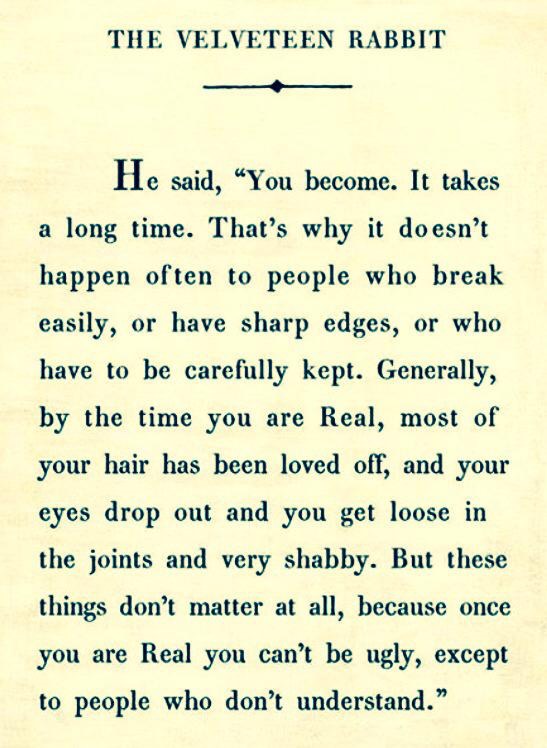
Or are we to stay caged, locked up behind the portals of our self-containment, hardly really Real, at all? 


Sunday, January 10, 2016

Whither The Weather Whether Wherever?


Analogies eventually run aground. Yet provisioning for a paradigm shift has its fits and starts; it’s a rocky feeling on the incumbent vessel as it’s tugged at the tethers. Obfuscations abound. Some shifts are so subtle we are not aware they’re taking place. We awake the next moment to realizing that what we (‘always’) saw on the port side of our lives has been swung to starboard. (A ‘Child of God’ phrase can be off-putting, let alone to one who has never seen the sea.) Yet in such realizations (particularly once one has adapted to the new terms of existence) one is aware of being afloat in a new world of possibilities. Yet there are some paradigms one invites in with a fuller knowledge of what can be, and they are not necessarily to be actualized with gentle subtlety. Some shifts in the status quo take a massive amount of thinking, of feeling, effort, hoping, and even praying. Twixt circumstance and chance and opportunity and luck lies many a slip to keep one at harbour. Yet at last to set sail, one’s spinnaker billowing, is indeed to feel the momentum of what is yet to be. For what journey is not a quest for something yet more? And what venture is not a mission embarked on for other vistas and attainments yet to explore?

We can be trapped by our own inertia, and can spin our wheels like hamsters within the confines of our cellular existences. One’s moving geographically is not necessarily freeing oneself from a cage. We trade in one set of habituations for another. We may live within a larger set and thereby attend a larger playground of opportunities, yet remain essentially the same person. (“And what’s wrong with that!?”)

If enlightenment is a journey and not a product then seeing more and more vistas in this world may not necessarily change the attitude, responsibility to the Whole, or habitual proclivity of the voyager. Ships were made to voyage, though they be safer left in the harbour. And many a vessel, tended to and cared for while moored within the breakwater can appear altogether more pristine than a vessel constantly out at sea. Comparisons are deceiving. The captain of the cabin cruiser sees a sea differently from the captain of a tanker. At base of this analogy of voyages, vessels, and opportunity, is the issue of who really is ‘in charge’? Integration, in its fullness, is much more difficult if one has never even seen the sea.

“Relax,” says the Buddha, “everything is chaotic and that is as it should be.” Easy for him to say. When there are dependents and creditors and longshoremen and passengers to our lives we are aware we exist not entirely to ourselves. Each person ‘in the know’ of ourselves deserves some measure. And we grow by them, as they do by us. Yet still, we are free to venture, and to change. And a paradigm shift can take place within, as we know, whether one is still anchored in a harbour or set out to sea to be ‘free’.

Self-centricty; Bondsmanship; Ego-centricity; Groupsmanship; Aggrandisement; and Acculturation attends the stages of our enlightenment, provisions our vessels, accords rank and file and determines docking privileges and club-standings and even cabin allocations. And we, as the captain of our very own vessels in varying measures succumb to the greater order, give obligation to crews, or we forge out on our own, only to find ourselves perhaps really adrift from the whole. But to ‘be at sea’ is not necessarily to be lost or adrift or imperiled. No, to set sail within, solo, can be to venture into new paradigms, fully conscious that life is the taking-on of new storms, of new experiences, and of new challenges. Enlightenment lives.


Or one can just stay within one’s vessel and await on and on and on the fairest of weather, perhaps one day to be tugged away... by an ‘other’? Who else to blame if indeed one eventually runs aground? Hm?


Saturday, January 2, 2016

New Year's Nuances


Newness fascinates. Centuries of evolving have given us markers. Birth dates. Year dates. Month and week dates. Time dates too. And tick-tock we live in the interim. But the brand-brand new? Each of everything is really so very attached to The All. So we categorize and quantify. We arrange and organize. And in our accretion there appears always room for adding on to what came before. Seems obvious. Yet the New Year’s Resolutions are decidedly a feeling of turning a page. For me, they are a clean slate.

Or are they?

It is because of dissatisfaction with the old that I want to change for the new. (At Christmas, especially, it’s a pity that my belt-size gets bigger, or that my shirt size swells. I shall decidedly diet, after New Year’s.) But we all know these usual holiday-season maladies are not the ‘real’ new things of which we speak. No, it’s the ‘other’ habits. We want to change our old, last year’s habits, for new, more-better ones.

Somewhere, a very long time ago, there was an article I read that suggested that everything one is and everything one does is habitual. The earlier it is ingrained, the more difficult it is to change. One’s accent is a good example. And there are body movements and ways of laughing and holding the head that are very much like one’s parents and siblings, passed down through the gene-stream. We even think habitually. Neural-synapses course through the corridors of our physiology such that we establish traffic patterns like maps in the cerebellum, like a personal geography in the hippocampus, like star-charts in the corpus-collosum, like contentions in the psyche. Our bodies resonate with impulses. And we react and respond and have attitudes and hold forth and move and do as we much have done month after month and year after year, until the decades add up and up. Still, we make New Year’s Resolutions.

Newness fascinates. It takes apparently 23 or so days to change a habit. “I shall no longer use the F word” is typical. (Well, at least not in company). (Definitely not in writing). (Maybe not in front of my friends). (Perhaps not when I’m driving). (Well, no, not at all). After all, that’s a foul way of thinking, indeed. Do we not hear, see, taste, touch, or smell words? Like sh.... Eewh! A foul word it is, indeed! (Especially at the dinner-table!)

Twenty-three or so days later (after being gentle with oneself for the relapses,) one no longer automatically spews out the ‘bad’ word, or does the old habit; one is changed! Application is the key. We are to keep applying a sense of intention and self-consciousness to the new habit, and we CAN change. Why, even not being able to walk much can be changed. How else does the non-runner eventually train to do the marathon? How else does the surprise of a Ukulele or a Zither (received by friends at Christmas) get eventually to be played? One learns the chords. One practices the new habit. And one acquires the new. Step by step.


“A gentleman is defined not so much by what he does in front of others,” intoned Mr. Jones, my old Solomon House housemaster, “but by what he thinks when by himself.” It was to be one of the great touchstones of my life, that phrase. Yes, new habits begin truly within. The difficulty is in persisting with them, sometimes, without. Changes that are fundamental affect not only the self, but those around us too. While we take on the new we can wrestle and struggle and be difficult. After all, someone usually has to hear you practicing those chords! Still, go for it! Get new. Get brighter. Get yet more light. Happy New Year!